A well‑designed privacy fence does more than block sightlines — it defines outdoor rooms, enhances curb appeal, improves acoustics, and creates a backdrop for planting, lighting, and entertaining. Whether you have a tiny urban yard, a suburban backyard, or a sloped rural lot, the right fence can turn an ordinary patch of land into a private sanctuary. Below are 20 stylish, practical, and Pinterest‑friendly privacy fence ideas, each presented with design guidance, material options, installation tips, and styling suggestions so you can choose the solution that fits your budget, climate, and aesthetic.
1. Horizontal Slat Fence for Modern Warmth
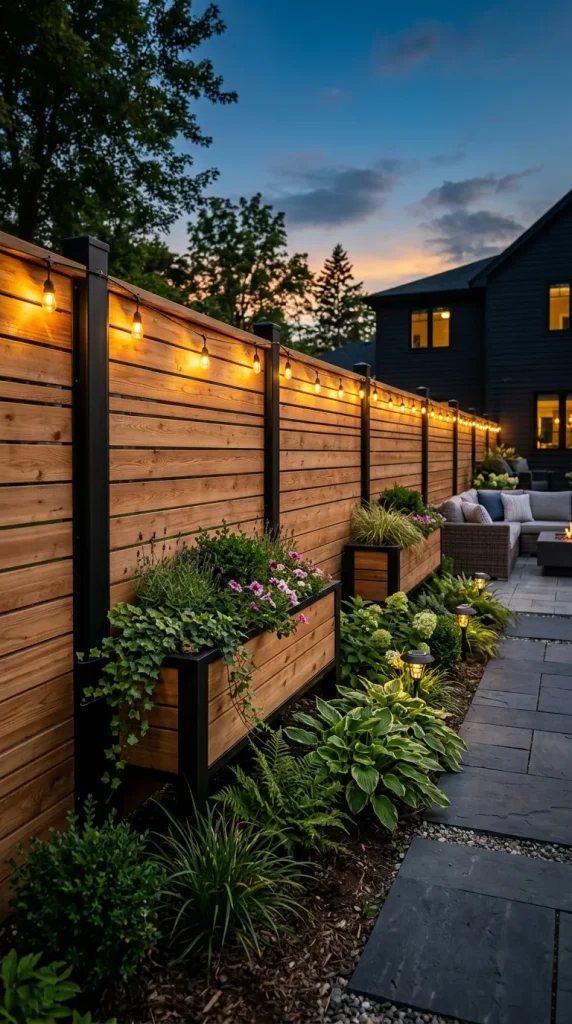
Why it works Horizontal slats read contemporary and clean. When built from warm woods like cedar or ipe, they add a modern, architectural feel while still feeling natural and inviting. The linear pattern visually widens narrow yards and creates a sleek backdrop for outdoor furniture and planters.
Design tips
- Use evenly spaced slats for a semi‑private look or tightly butted slats for full privacy.
- Stain or oil the wood in a warm tone to emphasize grain and protect against weather.
- Combine with metal posts (black powder‑coated steel) for a crisp, modern contrast.
Practical notes
- Choose rot‑resistant wood or composite slats for longevity.
- Leave a small gap at the bottom for drainage and airflow.
- For slatted fences taller than local code allows, consider stepping the fence on a slope or using a retaining wall.
Styling
- Plant low hedges or ornamental grasses in front to soften the base.
- Hang string lights along the top rail for evening ambiance.
- Add a narrow shelf or hooks for potted herbs and lanterns.
2. Lattice and Climber Combo for Romantic Privacy
Why it works Lattice panels paired with climbing plants create a living, changing privacy screen that’s both delicate and lush. This approach is ideal for gardeners who want a softer, cottage‑style boundary that blooms and evolves with the seasons.
Design tips
- Use sturdy lattice (wood or vinyl) with 1½–2 inch openings to support vines like clematis, climbing roses, or jasmine.
- Install a trellis extension on top of an existing fence to increase height without feeling heavy.
- Consider a staggered lattice pattern for added visual interest.
Practical notes
- Choose plants suited to your climate and sun exposure; some vines need full sun, others thrive in shade.
- Train vines early and prune regularly to prevent overgrowth and structural strain.
- Use rot‑resistant materials or paint/stain wood lattice to extend life.
Styling
- Intermix flowering vines with evergreen climbers for year‑round coverage.
- Add a bench or bistro set near the lattice for a fragrant, private seating nook.
- Use climbing edibles (grapevines, kiwi) for a functional and beautiful screen.

3. Gabion Wall for Industrial Chic and Sound Control
Why it works Gabion walls — wire cages filled with stone, brick, or recycled concrete — are robust, low‑maintenance, and excellent at dampening noise. They bring an industrial, sculptural quality to the landscape and can be built to any height for serious privacy.
Design tips
- Choose stone sizes and colors that complement your home’s palette.
- Use a steel or timber cap to create a clean top edge that doubles as seating.
- Combine gabion sections with planted pockets or integrated planters for a softer look.
Practical notes
- Gabions require a stable, level base and proper drainage to avoid settling.
- Use galvanized or PVC‑coated wire baskets for longevity.
- Consider professional installation for tall or load‑bearing gabion walls.
Styling
- Plant trailing vines or succulents in pockets for contrast.
- Integrate LED strip lighting along the top for dramatic nighttime effect.
- Use gabion walls to create terraced privacy on sloped sites.

4. Living Hedge for Natural, Eco‑Friendly Screening
Why it works A dense hedge is a classic privacy solution that provides habitat for wildlife, improves air quality, and softens hard edges. When thoughtfully chosen and maintained, hedges can be sculptural, fragrant, and incredibly effective at screening.
Design tips
- Select species suited to your zone: boxwood, yew, privet, laurel, or holly are common choices.
- Plant in staggered rows for faster fill‑in and better density.
- Use a mix of evergreen and deciduous shrubs for seasonal interest.
Practical notes
- Hedges require regular pruning to maintain shape and density.
- Provide adequate spacing and soil preparation at planting to avoid future problems.
- Consider root barriers near foundations or sidewalks to prevent invasive roots.
Styling
- Create a layered border with perennials and bulbs in front of the hedge.
- Install a narrow gravel path or stepping stones for a secret‑garden feel.
- Add a low fence or edging to protect young plants from pets and foot traffic.

5. Reclaimed Wood Fence for Rustic Character
Why it works Reclaimed wood fences tell a story. Boards salvaged from barns, pallets, or old structures bring unique patina, texture, and sustainability to your yard. This approach is perfect for homeowners who love rustic charm and eco‑conscious design.
Design tips
- Mix board widths and orientations for a handcrafted look.
- Seal or lightly oil reclaimed wood to preserve its character while protecting it from rot.
- Combine with metal brackets or exposed bolts for an industrial‑rustic aesthetic.
Practical notes
- Inspect reclaimed wood for nails, rot, and pests before installation.
- Use a structural frame of new pressure‑treated lumber for longevity.
- Expect color variation and embrace it as part of the design.
Styling
- Pair with vintage outdoor lighting and weathered metal planters.
- Use reclaimed posts as supports for hanging baskets or lanterns.
- Create a feature gate with decorative hardware to highlight the entrance.

6. Vertical Garden Wall for Green Privacy and Texture
Why it works A vertical garden wall turns a fence into a living tapestry. It’s ideal for small yards or urban patios where horizontal planting space is limited. Vertical gardens provide privacy, insulation, and a lush backdrop for outdoor living.
Design tips
- Use modular planting pockets, troughs, or wall‑mounted planters for easy maintenance.
- Choose a mix of trailing, upright, and flowering plants for depth and seasonal variety.
- Incorporate an irrigation system or drip lines to keep plants healthy with minimal effort.
Practical notes
- Ensure the wall structure can support the weight of saturated soil and plants.
- Select plants appropriate for the wall’s sun exposure and microclimate.
- Plan for access to water and occasional fertilization.
Styling
- Add a narrow bench or slim console in front of the wall to create a green room.
- Use contrasting planter colors or frames to create a graphic pattern.
- Integrate herbs and edibles for a functional, beautiful screen.

7. Metal Privacy Panels for Pattern and Light Play
Why it works Laser‑cut metal panels offer endless pattern possibilities — geometric, botanical, or custom motifs — and cast beautiful shadows that change throughout the day. Mounted on a frame, they provide privacy while allowing light and airflow.
Design tips
- Choose powder‑coated steel or corten steel for durability and finish options.
- Use panels as full fences, gate inserts, or as decorative insets between posts.
- Consider backlighting the panels for dramatic evening silhouettes.
Practical notes
- Metal panels are low‑maintenance but may require rust protection depending on the finish.
- Ensure panels are securely anchored to resist wind loads.
- Combine with wood or masonry posts for structural support and warmth.
Styling
- Plant low hedges or grasses at the base to soften the metal edge.
- Use repeating panel patterns to create rhythm along long boundaries.
- Add climbing vines that weave through cutouts for a hybrid look.

8. Gabion‑Planter Hybrid for Structure and Softness
Why it works A gabion‑planter hybrid pairs the solidity of stone with the softness of planting. By integrating planter boxes into gabion walls or stacking gabion baskets with soil pockets, you get a multifunctional fence that’s both sculptural and green.
Design tips
- Alternate gabion baskets filled with stone and soil to create a checkerboard of texture.
- Use native grasses, succulents, or small shrubs in the planted pockets for low maintenance.
- Cap the gabion with a timber bench or planter ledge for seating and display.
Practical notes
- Plan drainage carefully to prevent waterlogging in planted sections.
- Use geotextile fabric to separate soil from stone fill where necessary.
- Consider professional help for structural stability on taller installations.
Styling
- Integrate small water features or birdbaths into the design for wildlife appeal.
- Use contrasting stone colors to create patterns or horizontal bands.
- Place outdoor art or sculptures on wider gabion caps for focal points.

9. Privacy Pergola with Retractable Screens
Why it works A pergola with retractable screens or curtains creates a flexible privacy solution that doubles as an outdoor room. When closed, screens block sightlines and wind; when open, they let in light and air. This is perfect for patios, decks, and poolside lounges.
Design tips
- Choose weather‑resistant fabrics in neutral or bold colors depending on your style.
- Use motorized screens for convenience or manual tracks for a budget‑friendly option.
- Combine with climbing vines on the pergola beams for added shade and softness.
Practical notes
- Ensure pergola posts are anchored to a solid foundation for stability.
- Select UV‑resistant fabrics to prevent fading and extend lifespan.
- Add integrated lighting and ceiling fans for year‑round comfort.
Styling
- Layer outdoor rugs, cushions, and lanterns to create a cozy living room feel.
- Use sheer curtains for daytime privacy and heavier screens for evening seclusion.
- Add potted trees or tall planters around the pergola for extra screening.

10. Mixed‑Height Layered Fence for Depth and Interest
Why it works A mixed‑height fence uses varying fence heights, materials, and planting to create depth and a sense of enclosure without monotony. Taller sections provide privacy where needed; lower sections maintain sightlines and neighborly connection.
Design tips
- Step fence heights to follow the topography or to create zones (dining, play, garden).
- Combine materials — wood, metal, and living hedges — to create texture and rhythm.
- Use taller screens near seating areas and lower picket sections near pathways.
Practical notes
- Check local codes for maximum fence heights and setback requirements.
- Use consistent post spacing and materials to tie the varied sections together.
- Plan for maintenance access to taller sections and gates.
Styling
- Plant layered borders with shrubs, perennials, and groundcovers to echo the fence’s stepped profile.
- Use accent posts or caps to mark transitions between heights.
- Add integrated seating or planters in lower sections for multifunctional design.

Installation, Budgeting, and Maintenance Guide
Planning and permits
- Always check local zoning and HOA rules for height, materials, and setbacks before building.
- Obtain necessary permits and call utility services to mark underground lines.
- Sketch a site plan showing property lines, gates, and any slopes.
Budgeting
- Material choice drives cost: vinyl and composite are low‑maintenance but pricier upfront; wood is midrange; gabion and masonry are higher cost but durable.
- Factor in labor, site prep, drainage, and finishing (stain, sealant, lighting).
- Consider phased installation: start with the most visible or problematic sections and expand later.
Maintenance
- Wood fences: stain or seal every 2–4 years; replace damaged boards promptly.
- Metal panels: inspect for rust and touch up powder coat as needed.
- Living fences: prune, fertilize, and water during establishment; mulch to retain moisture.
- Gabion walls: check for settling and ensure wire baskets remain intact.
Sustainability tips
- Use reclaimed or FSC‑certified wood to reduce environmental impact.
- Choose native plants for living fences to support pollinators and reduce water use.
- Reuse stone or brick in gabions and planters where possible.
Final Styling Ideas and Use Cases
- Urban courtyard: Combine metal panels with vertical planters for a compact, modern screen.
- Poolside privacy: Use tall gabion walls or a mixed‑height fence with evergreen hedges to block wind and sightlines.
- Backyard entertaining: Create a pergola with retractable screens and integrated lighting for a flexible party space.
- Cottage garden: Lattice with climbing roses and a low picket gate creates a storybook entrance.
- Slope solution: Terraced gabion walls with planted pockets stabilize soil and provide layered screening.
A thoughtfully chosen privacy fence becomes more than a boundary — it’s an outdoor room divider, a design statement, and a living backdrop for your daily life. Consider how you use your yard, the level of maintenance you want, and the mood you want to create. With the right materials and a little creativity, your fence can transform your outdoor space into a private, beautiful retreat.


More ideas to come…