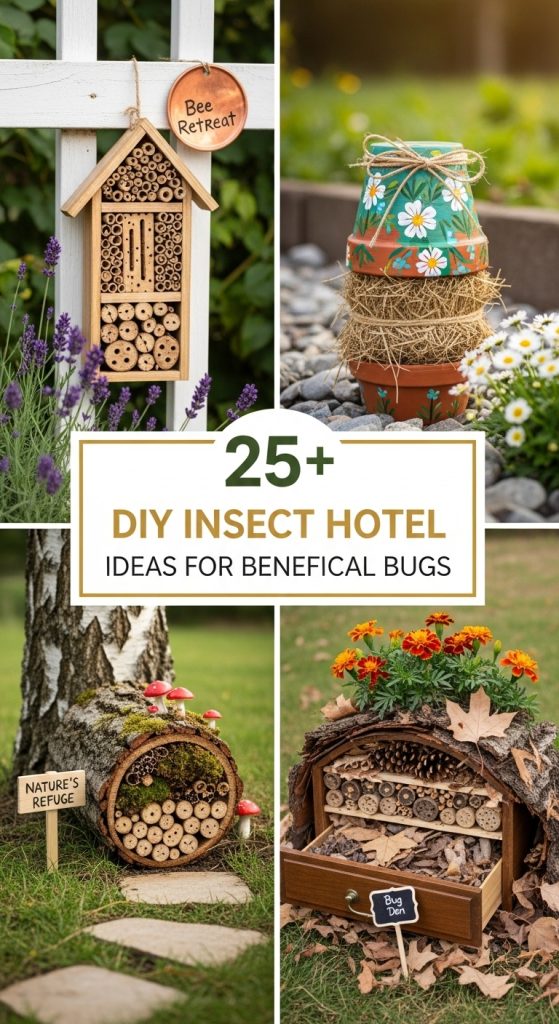
DIY Insect Hotel Ideas for Beneficial Bugs
In the modern garden, it’s not just about aesthetics and blooms – it’s also about supporting biodiversity and sustainability. One fantastic way to do this is by creating an insect hotel: a cozy, natural shelter for beneficial bugs like ladybugs, solitary bees, lacewings, and beetles. These tiny guests are not only fascinating to observe but also play crucial roles in pollination, pest control, and ecosystem health.
In this Pinterest-friendly guide, we’ll explore beautifully creative DIY insect hotel ideas, each tailored to encourage bug life in your backyard. These ideas are sustainable, educational, fun for families, and most importantly — a gift to Mother Nature.
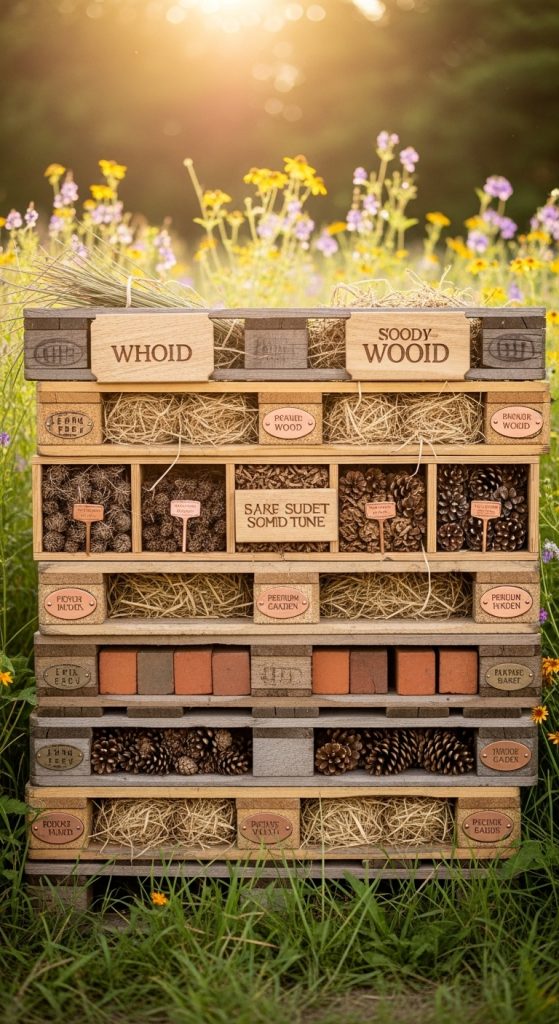
🏡 1. Wooden Pallet Bug Mansion
Best for: Solitary bees, beetles, spiders, and earwigs
Materials: Recycled wooden pallets, straw, twigs, bamboo canes, bricks with holes, pinecones
Instructions: Stack 3–4 wooden pallets with various natural materials layered inside. The variety of textures and holes provides nesting and hiding spaces for different insects. Place in a sheltered, sunny spot.
Pinterest Tip: Paint the edges with eco-friendly colorful paints and label the layers “Bee Lounge,” “Bug Bunk,” or “Ladybug Loft.”
🌲 2. Terracotta Pot Tower
Best for: Ladybugs and lacewings
Materials: Terracotta pots, straw, bamboo, leaves, twine
Instructions: Stack 2–3 inverted pots, filling each with straw and dry plant matter. Tie together with natural twine or garden wire. Leave gaps for entry and place in a quiet corner of the garden.
Design Tip: Paint floral or bug patterns around the pot for an artistic touch.

🛋️ 3. Hanging Bamboo Bee Nests
Best for: Solitary bees (like mason bees)
Materials: Bamboo canes, twine, small tin cans or wooden frames
Instructions: Cut bamboo canes to 4–6 inch pieces and bundle them together inside a small frame or tin can. Hang from a fence, tree, or pergola facing the morning sun.
Eco Tip: Ensure the canes are dry and smooth inside to prevent wing damage.


💼 4. Upcycled Drawer Bug Habitat
Best for: Ground beetles, worms, and spiders
Materials: Old drawers, wood shavings, rocks, dry leaves, sticks
Instructions: Bury an old drawer halfway into the ground. Fill it with organic debris and natural clutter to mimic a forest floor. Great for crawling insects.
Styling Tip: Add a mini wooden sign: “Underground Bug Bungalow.”

🏠 5. Brick Wall Hotel
Best for: Solitary bees and beneficial beetles
Materials: Clay bricks with holes, mortar or stacking design, dried reeds
Instructions: Stack clay bricks to create a standing wall or section on a patio. Insert dried reeds or rolled cardboard into the holes for added variety. Place in a sunny, dry space.
Safety Tip: Avoid areas near active play zones to prevent disruption.

🎨 6. Kids’ Painted Bug Box
Best for: Lacewings and ladybugs
Materials: Small wooden box or birdhouse, paint, bark, wool, dry moss
Instructions: Let kids decorate a small wooden box, then fill with materials to create warm, moist hiding places. Hang at kid-height or place on a low garden shelf.
Bonus: A great weekend project for family learning about ecology.


📁 7. Hollow Log Insect Haven
Best for: Beetles, ants, millipedes
Materials: A hollow log or drilled thick log, compost, bark, soil
Instructions: Place horizontally in a shaded corner. Fill with moist compost and cover the top with moss or bark. Insects will find homes in the crevices and rotting wood.
Visual Tip: Add a moss path or stepping stones leading up to the log.

🌻 8. Straw Bale Fortress
Best for: Spiders, ground beetles, and ladybugs
Materials: A tightly packed straw bale, tarp or wood for cover
Instructions: Place straw bale in garden edge and lightly cover the top with wood or tarp to prevent soaking. Bugs will burrow deep into the dry straw for shelter.
Upstyle Idea: Place a flower planter on top for dual use.

🧜♂️ 9. Stone Stack Shelter
Best for: Ground insects, ants, centipedes
Materials: Flat stones or slates, bark, soil
Instructions: Stack flat stones loosely, with bark layers and moist soil in between. Keep near a garden pond or shady hedge.
Style Tip: Arrange artistically like a Zen rock garden.

🍃 10. Hanging Pinecone Pods
Best for: Lacewings, ladybugs, hoverflies
Materials: Pinecones, string, melted beeswax, herbs (rosemary, thyme)
Instructions: Dip pinecones in melted beeswax and roll in crushed herbs. Hang from tree branches or fence posts. The scent attracts helpful bugs and offers cozy crevices.
Aesthetic Tip: Use jute string and label with kraft paper tags.

🌿 Placement Tips for Insect Hotels
- Face east or southeast to catch morning sun.
- Place at least 1 meter off the ground (for bees).
- Keep sheltered from heavy rain and wind.
- Avoid pesticide use nearby.
🌟 Final Thoughts: Welcome the Tiny Garden Heroes
Creating an insect hotel is more than a weekend craft — it’s a contribution to local biodiversity and a sustainable gardening practice. With just a few materials and a little creativity, you can turn your backyard into a sanctuary for pollinators and natural pest controllers. Plus, it’s a fabulous Pinterest-worthy addition to any eco-conscious garden.

So gather your twigs, clay pots, and pinecones, and start building a beautiful, bug-friendly retreat today!