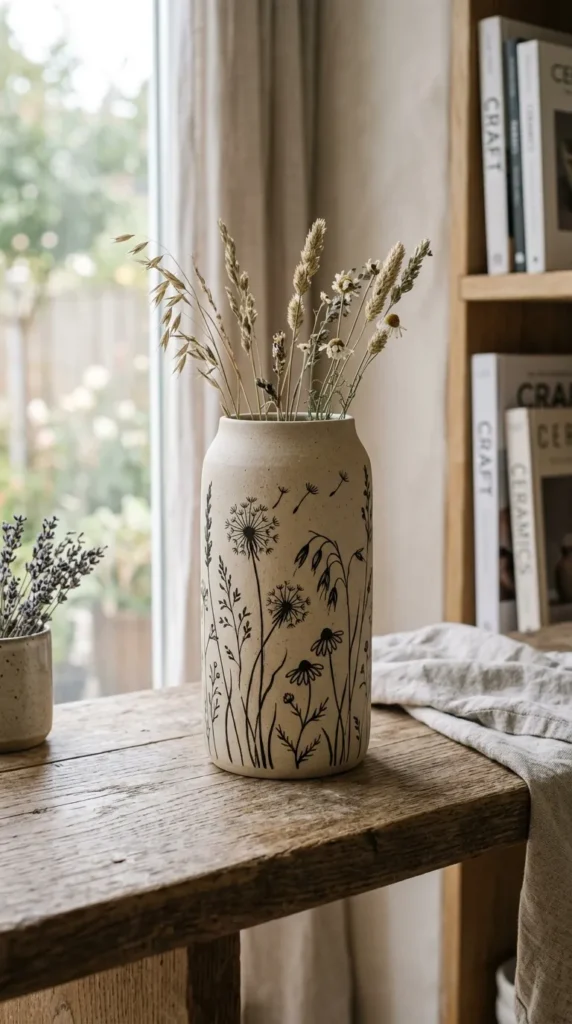
Hand-painted ceramics have emerged as one of the most expressive, tactile, and rewarding artistic mediums. Whether you are working with bisqueware ready for commercial underglaze, air-dry clay pieces cured on your studio desk, or plain terracotta pots sourced from a garden center, transforming raw clay surfaces into stunning fine art allows you to merge sculpture with illustration.
This comprehensive guide breaks down 20 elevated, highly aesthetic pottery painting concepts. Each idea provides an in-depth design breakdown, complete step-by-step painting instructions, essential studio tips, creative variations, and material recommendations to help you create heirloom-quality functional and decorative pottery.
Ceramic Painting Essentials: Preparation and Finishing
Achieving smooth, vibrant, and durable paintwork on pottery requires understanding the structural behavior of clay and color mediums.
1. Mediterranean Citrus Orchard
Design Meaning & Aesthetic Essence
Inspired by the sun-drenched coasts of Southern Italy and the Greek islands, this concept celebrates vitality, warmth, and organic freshness. It pairs rich, painterly lemons and oranges against raw terracotta or soft cream backgrounds, channeling the timeless beauty of Mediterranean alfresco dining.
Materials Needed
- Lemon yellow, deep cadmium orange, olive green, warm ochre, and titanium white paints
- Round brushes (sizes #2 and #6)
- Flat wash brush
- High-gloss food-safe glaze or gloss varnish
Step-by-Step Execution
- Base Layer: Apply a smooth, milky white or light oatmeal base coat over the vessel. Leave the base slightly sheer if you desire an authentic rustic look.
- Fruit Layout: Use a dilute wash of yellow ochre to sketch asymmetrical clusters of lemons and oranges around the rim and belly of the piece.
- Color Blocking: Fill the citrus shapes using flat yellow and orange tones, keeping edges organic rather than perfectly circular.
- Shading & Dimension: Blend a hint of raw umber or terracotta orange into the shadows of each fruit while the base paint is wet. Add a soft white highlight curve along the upper curve.
- Foliage & Stems: Paint slender, pointed leaves using deep olive green, accented with sap-green veining and warm brown woody stems connecting the clusters.
- Finishing Details: Add fine olive-green speckles across open areas for an artisanal, hand-thrown feel.
Studio Tips & Creative Variations
- Tip: Work wet-on-wet on the citrus shapes to create natural, soft gradients across the rinds.
- Variation (Blue Chintz Background): Add delicate cobalt-blue mosaic scrolls behind the lemons for an authentic Sicilian Majolica look.
- Variation (Blood Orange Theme): Swap classic yellow lemons for deep crimson, sliced-open blood oranges exposing detailed segments.