10. Mixed‑Height Layered Fence for Depth and Interest
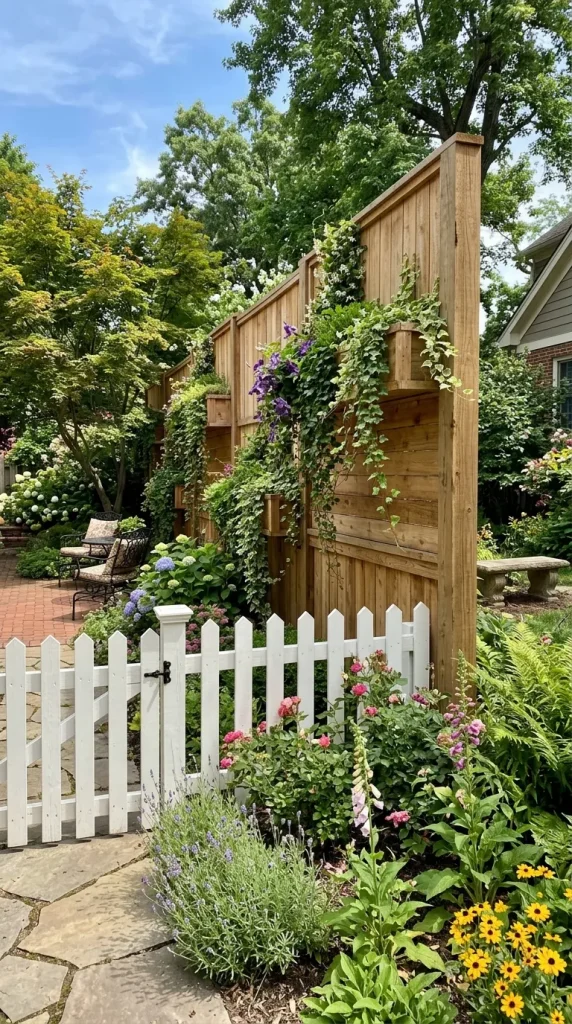
Why it works A mixed‑height fence uses varying fence heights, materials, and planting to create depth and a sense of enclosure without monotony. Taller sections provide privacy where needed; lower sections maintain sightlines and neighborly connection.
Design tips
- Step fence heights to follow the topography or to create zones (dining, play, garden).
- Combine materials — wood, metal, and living hedges — to create texture and rhythm.
- Use taller screens near seating areas and lower picket sections near pathways.
Practical notes
- Check local codes for maximum fence heights and setback requirements.
- Use consistent post spacing and materials to tie the varied sections together.
- Plan for maintenance access to taller sections and gates.
Styling
- Plant layered borders with shrubs, perennials, and groundcovers to echo the fence’s stepped profile.
- Use accent posts or caps to mark transitions between heights.
- Add integrated seating or planters in lower sections for multifunctional design.
Installation, Budgeting, and Maintenance Guide
Planning and permits
- Always check local zoning and HOA rules for height, materials, and setbacks before building.
- Obtain necessary permits and call utility services to mark underground lines.
- Sketch a site plan showing property lines, gates, and any slopes.
Budgeting
- Material choice drives cost: vinyl and composite are low‑maintenance but pricier upfront; wood is midrange; gabion and masonry are higher cost but durable.
- Factor in labor, site prep, drainage, and finishing (stain, sealant, lighting).
- Consider phased installation: start with the most visible or problematic sections and expand later.
Maintenance
- Wood fences: stain or seal every 2–4 years; replace damaged boards promptly.
- Metal panels: inspect for rust and touch up powder coat as needed.
- Living fences: prune, fertilize, and water during establishment; mulch to retain moisture.
- Gabion walls: check for settling and ensure wire baskets remain intact.
Sustainability tips
- Use reclaimed or FSC‑certified wood to reduce environmental impact.
- Choose native plants for living fences to support pollinators and reduce water use.
- Reuse stone or brick in gabions and planters where possible.
Final Styling Ideas and Use Cases
- Urban courtyard: Combine metal panels with vertical planters for a compact, modern screen.
- Poolside privacy: Use tall gabion walls or a mixed‑height fence with evergreen hedges to block wind and sightlines.
- Backyard entertaining: Create a pergola with retractable screens and integrated lighting for a flexible party space.
- Cottage garden: Lattice with climbing roses and a low picket gate creates a storybook entrance.
- Slope solution: Terraced gabion walls with planted pockets stabilize soil and provide layered screening.
A thoughtfully chosen privacy fence becomes more than a boundary — it’s an outdoor room divider, a design statement, and a living backdrop for your daily life. Consider how you use your yard, the level of maintenance you want, and the mood you want to create. With the right materials and a little creativity, your fence can transform your outdoor space into a private, beautiful retreat.
More ideas to come…