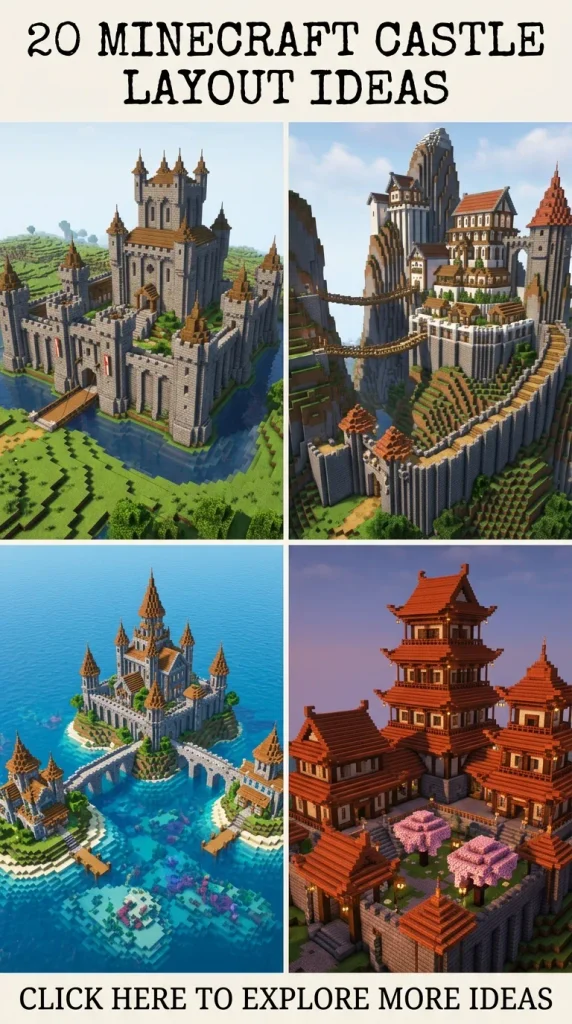
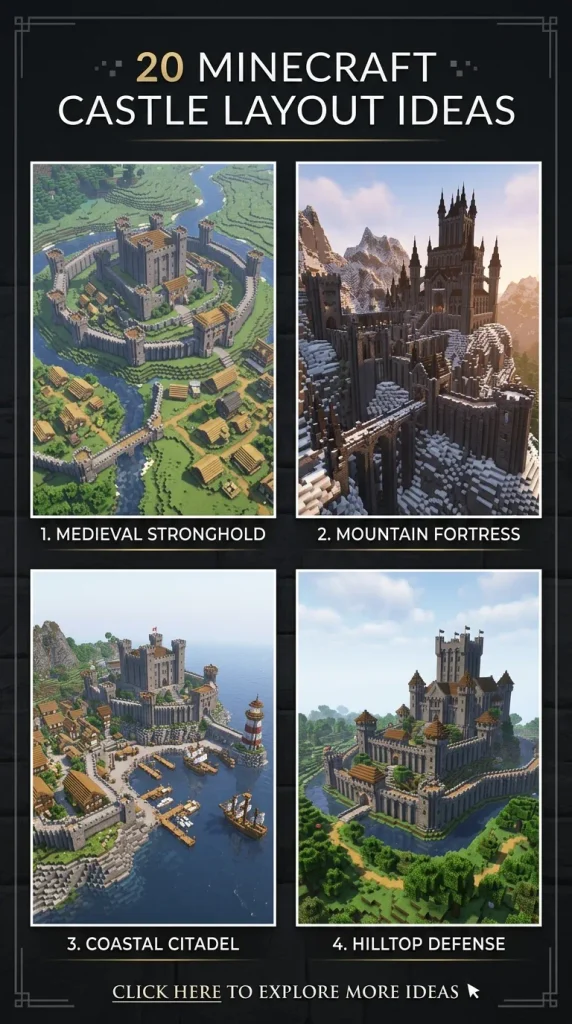
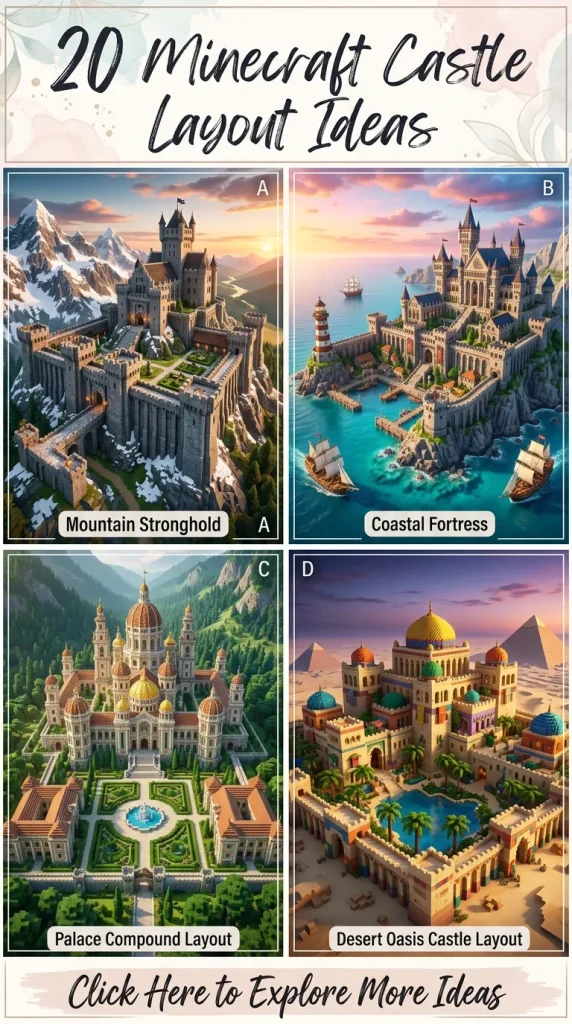
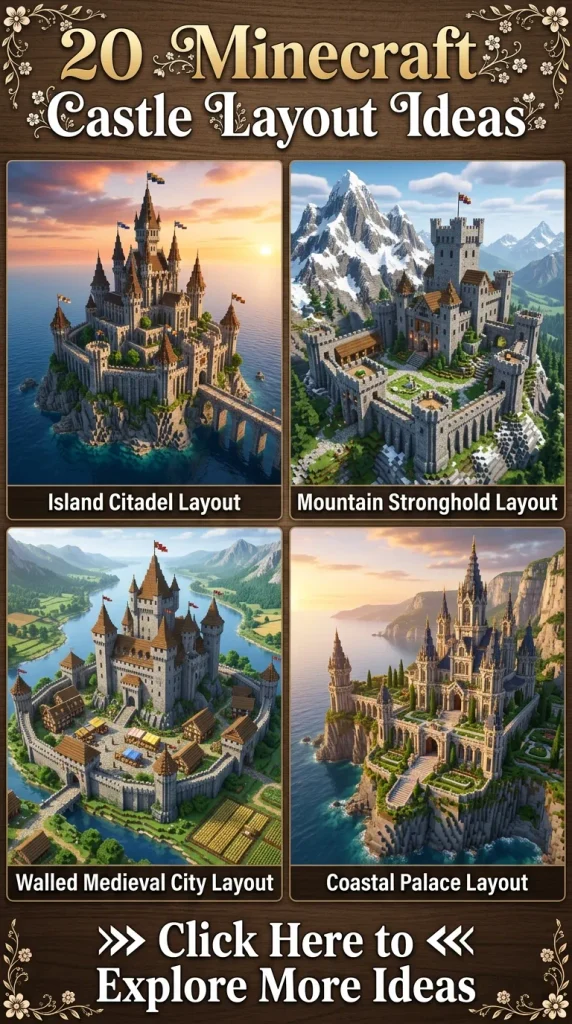
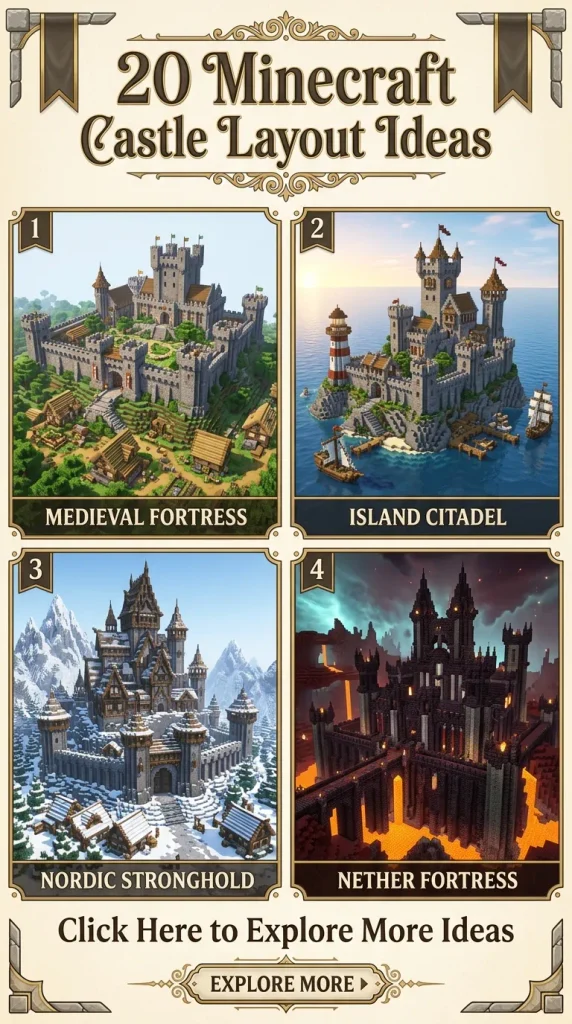
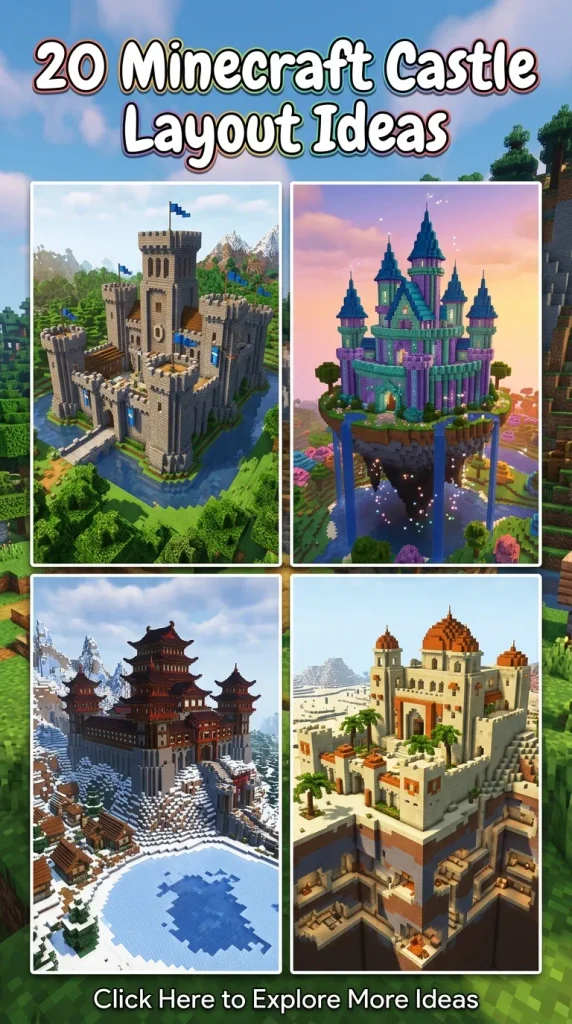
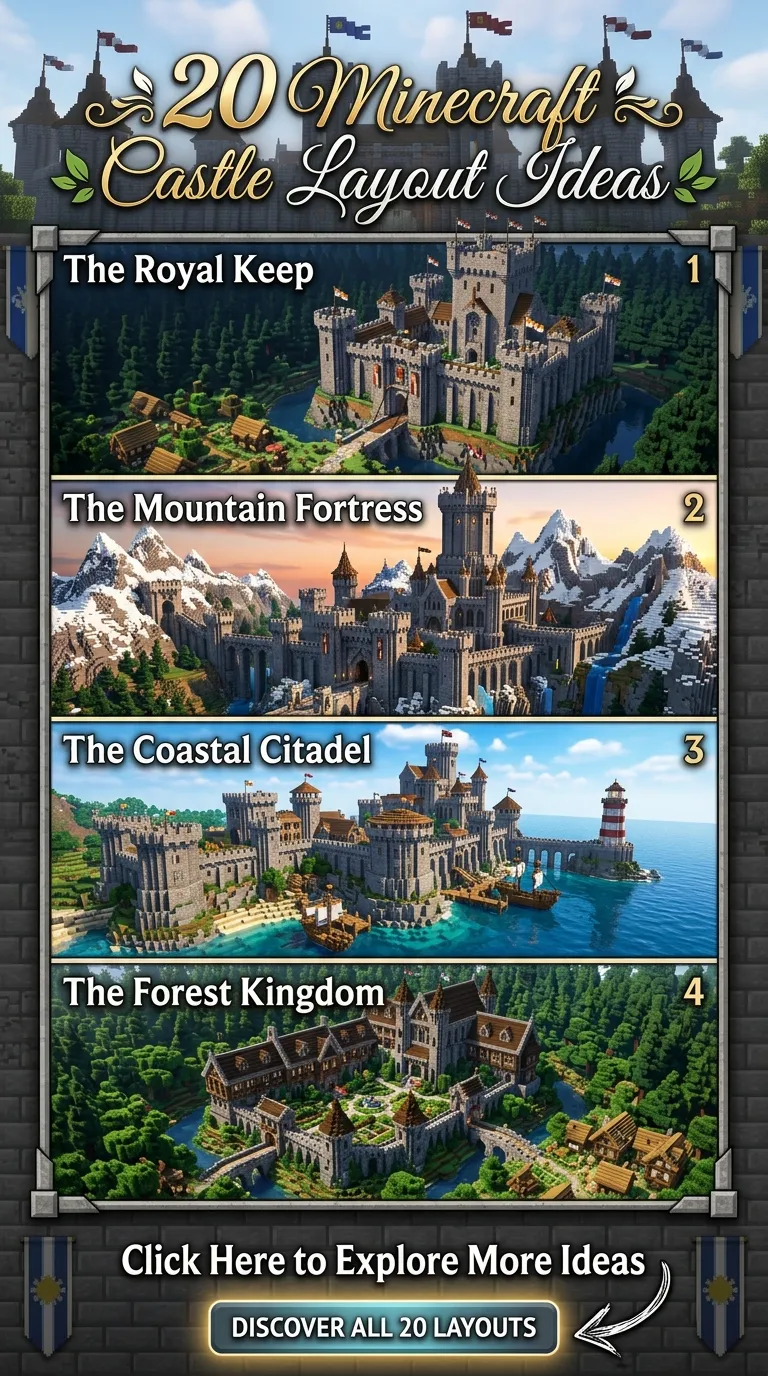
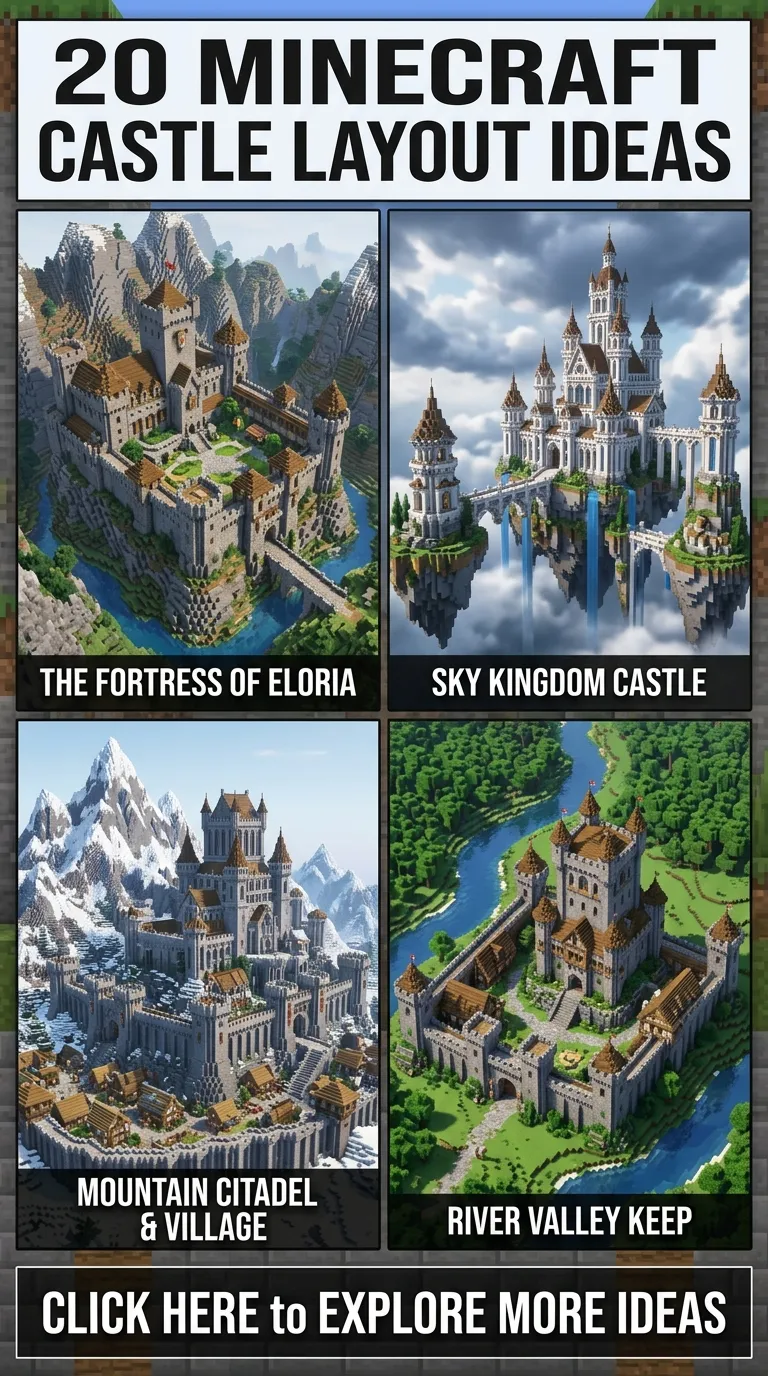
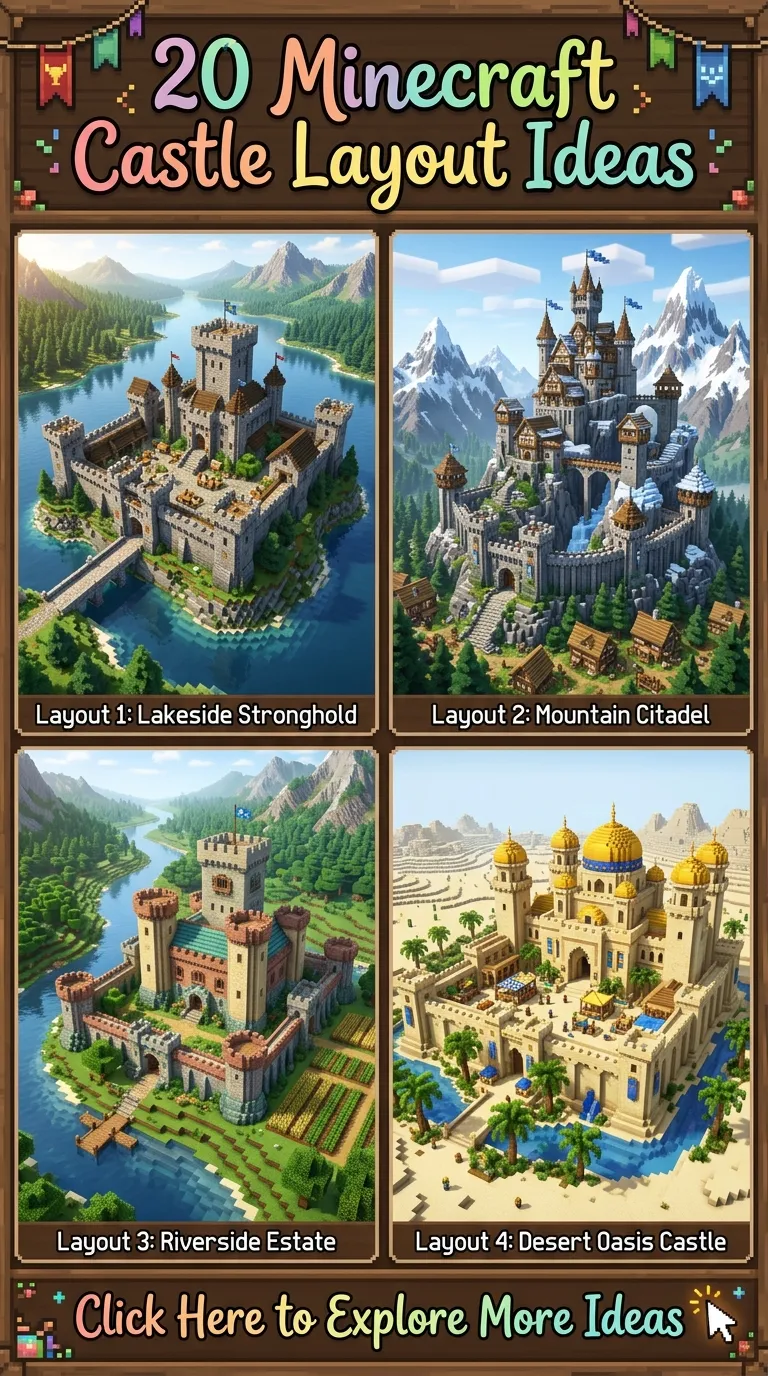
Minecraft castle layouts define how a build functions, flows, and integrates into the surrounding landscape. Choosing the right layout before placing the first block prevents awkward proportions, simplifies interior decoration, and ensures an engaging silhouette.
1. The Concentric Ring Keep
A defensive architectural layout where multiple concentric curtain walls encircle a high central tower, with each ring elevated above the last.
- What It Means: This design relies on radial geometry. It features an outer bailey, an intermediate functional courtyard, and a high-tier royal keep at the absolute center.
- How to Build It: Lay down circular blueprints using voxel circle generators. Start with a $65\times65$ block outer wall, followed by a $45\times45$ middle rampart, and finish with a $25\times25$ central tower. Elevate each tier by at least 10 blocks.
- Palette & Blocks: Deepslate Bricks, Polished Basalt, Stone Brick variants, Iron Bars, and Dark Oak Accents.
- Pro Tips: Use diagonal skybridges to connect the middle ramparts to the central keep. This creates vertical depth and practical defensive pathways.
- Variations: Replace standard stone with End Stone Bricks and Purpur to create a mystical Void Citadel.
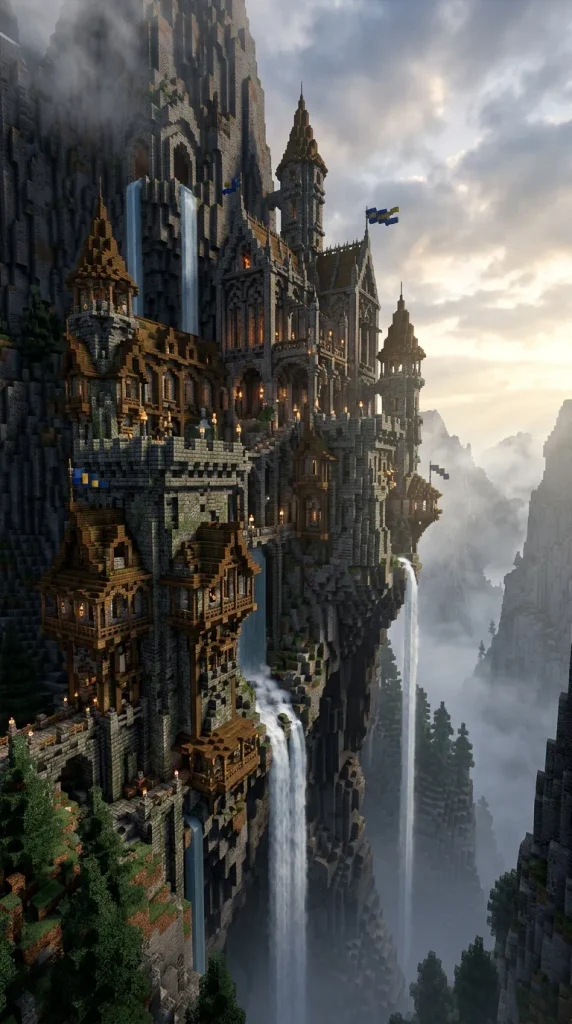
2. The Asymmetrical Cliffside Fortress
A build carved directly into a steep mountain face that prioritizes natural terrain integration over strict symmetry.
- What It Means: Rather than flattening the land, this layout follows the mountain contours, dividing living chambers, watchtowers, and parapets across varying cliff heights.
- How to Build It: Identify an extreme mountain biome or jagged cliff. Build the main gatehouse at the cliff base, connect it via winding stone staircases to mid-tier bastion chambers embedded in the rock, and crown the peak with an overhanging throne room.
- Palette & Blocks: Cobblestone, Andesite, Spruce Logs, Stripped Spruce Wood, and Terracotta.
- Pro Tips: Use inverted stairs, stone walls, and oak support beams beneath overhanging rooms to simulate architectural load distribution.
- Variations: Add cascading waterfalls that flow through open-air courtyard aqueducts straight off the cliff edge.
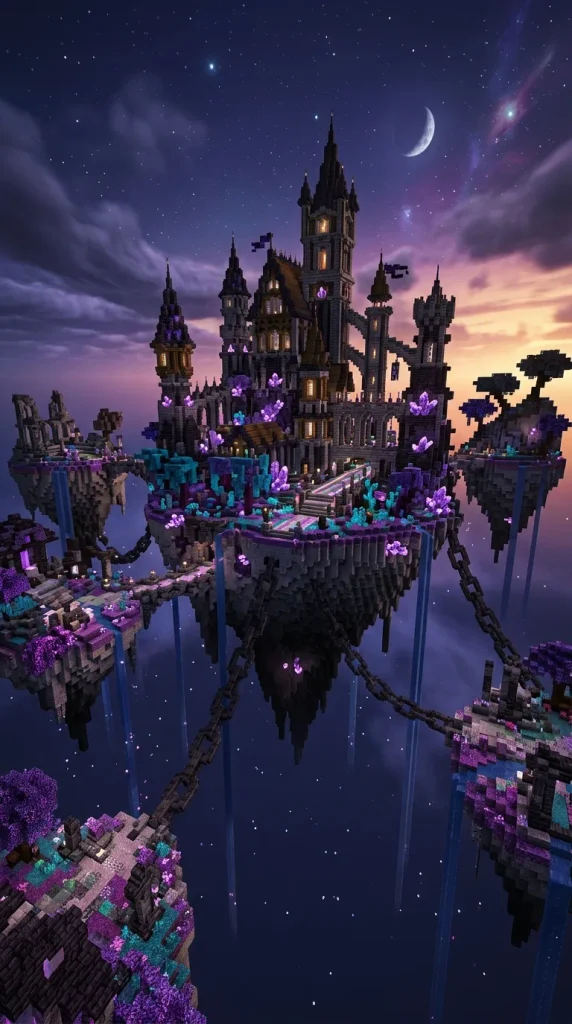
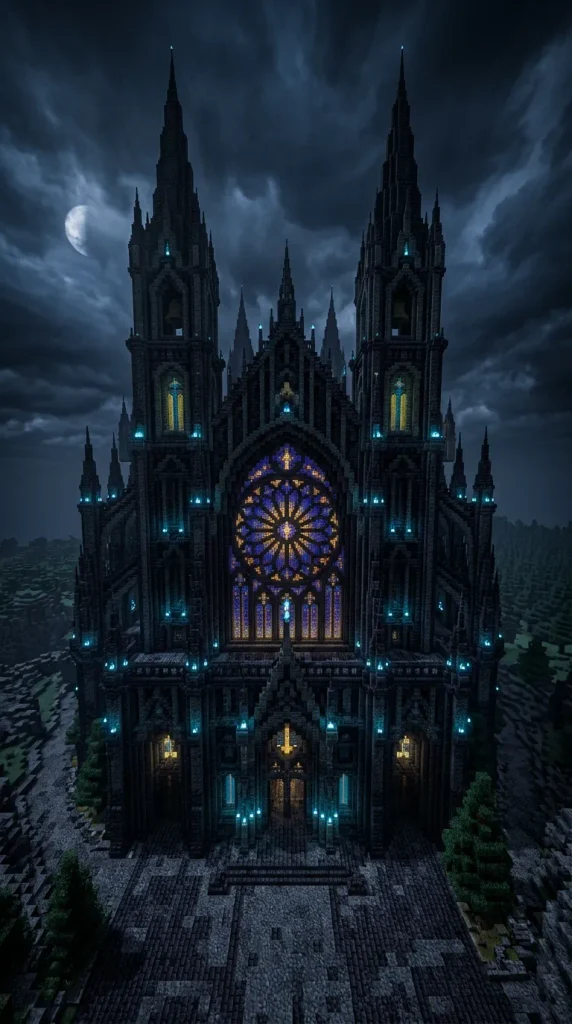
3. The Symmetrical Gothic Spire Complex
A cathedral-inspired castle layout featuring sharp vertical lines, flying buttresses, pointed arches, and high-reaching spires.
- What It Means: This layout emphasizes grand verticality and strict bilateral symmetry along a central grand hallway.
- How to Build It: Map a cross-shaped (cruciform) foundation. Build soaring nave walls lined with pointed stained-glass windows, supported externally by arching flying buttresses anchored into exterior pillars. Top every corner with slender needle spires.
- Palette & Blocks: Blackstone, Polished Deepslate, Tinted Glass, Nether Brick Fences, and Soul Lanterns.
- Pro Tips: Incorporate gradient shading on spires—transitioning from Deepslate at the base to Blackstone, and finishing with Coal Blocks near the tips.
- Variations: Construct a white Gothic variation using Calcite, Diorite, and Quartz for an ethereal, heavenly aesthetic.
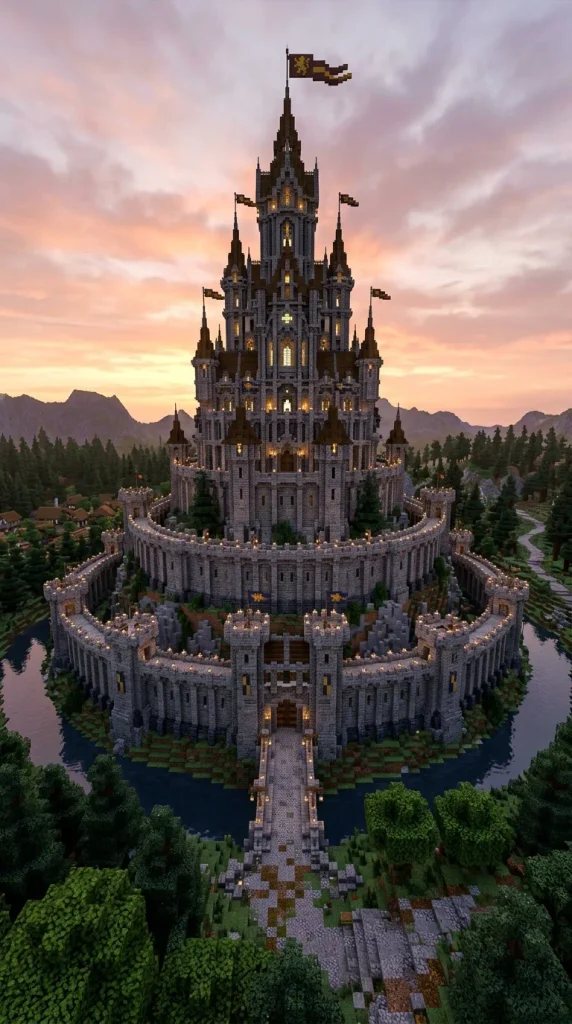
4. The Floating Sky-Island Bastion
A celestial castle spread across an archipelago of floating terrain chunks linked by suspension bridges and energy beams.
- What It Means: An anti-gravity layout where functional zones (storage, enchanting, living quarters) are split into individual floating islands surrounding a massive central island.
- How to Build It: Build organic inverted cone islands using stone, dirt, and hanging roots. Place the grand keep on the largest central landmass, placing satellite towers, stables, and crop gardens on smaller surrounding islets.
- Palette & Blocks: End Stone, Purpur Blocks, Amethyst Blocks, Warp Stems, and Sea Lanterns.
- Pro Tips: Add trailing vines, drooping glow berries, and bottom-facing chains with hanging glowstone clusters to give the islands a grounded sense of physics.
- Variations: Use chains to anchor the floating islands to the ground below, giving the impression of an escaped fortress held back by ancient tethers.
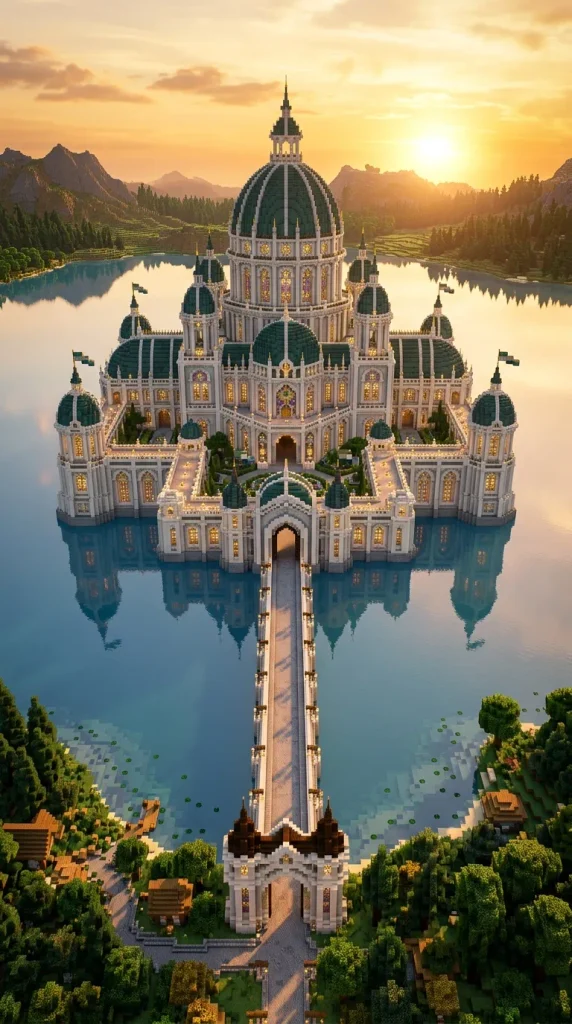
5. The Moated Water-Gate Palace
A low-profile, ornate palace layout set inside a massive artificial lake, accessible strictly via fortified bridges and underwater tunnels.
- What It Means: An aquatic defensive layout emphasizing wide reflections, grand bridges, water-level sally ports, and symmetrical botanical courtyards.
- How to Build It: Excavate a wide perimeter moat. Build the foundation directly out of the waterbed using prismarine and smooth stone. Construct four low corner towers linked by wide promenades, with a central domed palace courtyard.
- Palette & Blocks: Quartz Bricks, Smooth Quartz, Prismarine variants, Dark Prismarine, and Cyan Stained Glass.
- Pro Tips: Submerge sea lanterns beneath moss rugs along the moat floor to light the castle perimeter invisibly at night.
- Variations: Convert the lower levels into glass viewing galleries looking into a populated coral reef biome.
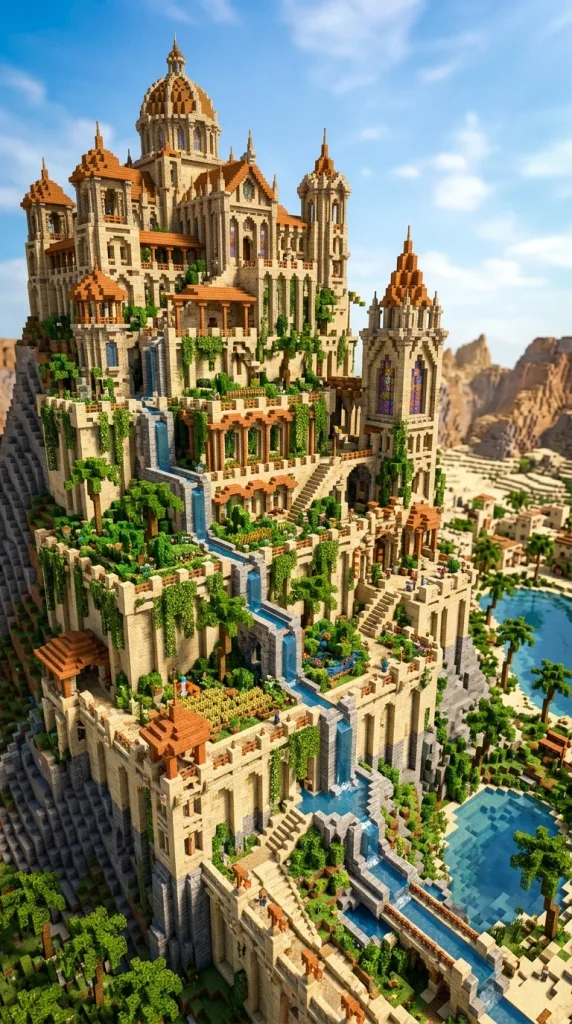
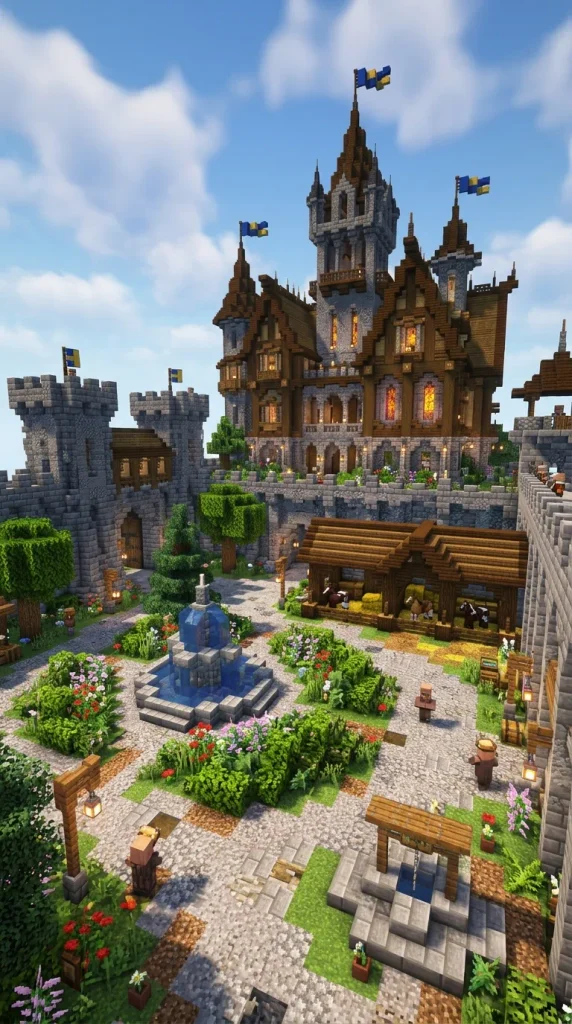
6. The Courtyard Manor Citadel
A sprawling layout focused on internal living spaces, enclosed gardens, stables, and market squares protected by an outer fortress wall.
- What It Means: This design trades towering spires for broad, functional living complexes surrounding an expansive open-air central courtyard.
- How to Build It: Construct an outer perimeter wall with four medium watchtowers. Run modular, two-story manor wings along the interior walls, leaving an open $40\times40$ area in the center for a botanical fountain garden, blacksmith forge, and trading stalls.
- Palette & Blocks: Mud Bricks, Stripped Oak Wood, Brick Blocks, Mossy Stone Bricks, and Flowering Azalea Leaves.
- Pro Tips: Use leaf blocks as overgrown climbing ivy across the interior courtyard facades to soften harsh stone lines.
- Variations: Transform the central courtyard into an open-air jousting arena or training yard with armor stands and target practice lanes.
7. The Tiered Steppe Citadel
A terraced castle layout designed for hillsides, featuring stacked, flat-roofed palace tiers that step back as they climb.
- What It Means: Inspired by Mesopotamian ziggurats and Mediterranean hill towns, this layout stacks functional living platforms on top of each other.
- How to Build It: Build broad rectangular bases on a slope. Set each progressive floor back by 4–6 blocks, turning the roof of the lower floor into an outdoor terrace, garden, or balcony for the level above.
- Palette & Blocks: Smooth Sandstone, Cut Sandstone, Terracotta, Acacia Wood, and Jungle Leaves.
- Pro Tips: Connect terraces with wide outdoor stairs flanked by flowing water channels to create a luxury desert oasis feel.
- Variations: Use packed ice, snow blocks, and spruce wood to adapt this layout into a frozen Nordic mountain retreat.
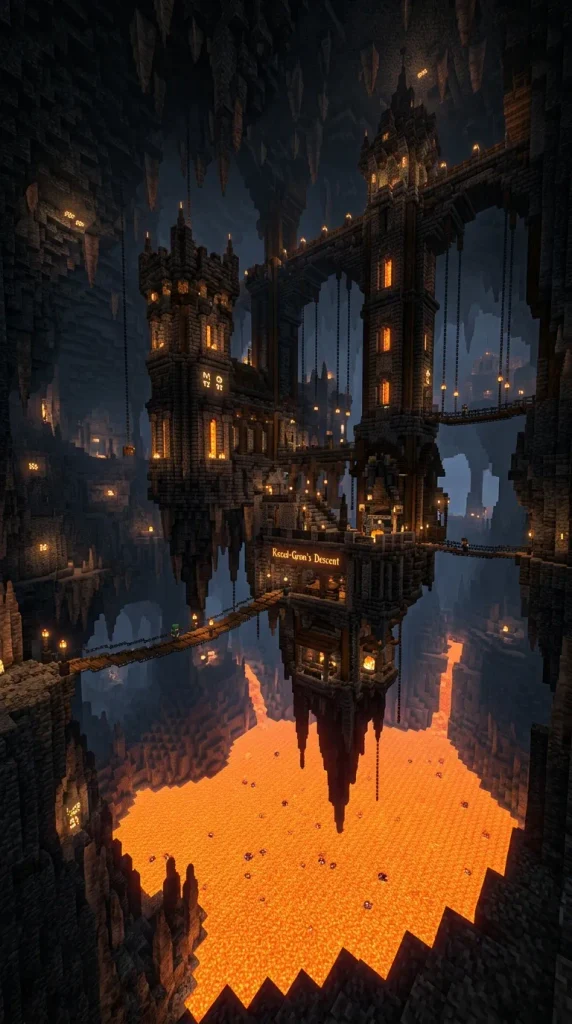
8. The Subterranean Under-Keep
A subterranean stronghold built directly into a massive natural cave system, suspended over deep chasms or lava seas.
- What It Means: An inverted layout where towers hang downward from the cave ceiling (stalactite style) or bridge across underground ravines.
- How to Build It: Find a mega-cave or deepslate-level cavern. Anchor the primary keep into the cavern ceiling using massive stone chains. Construct suspended walkways and hanging chambers that look down onto an illuminated lava floor.
- Palette & Blocks: Tuff, Deepslate Tiles, Magma Blocks, Mangrove Wood, and Crimson Planks.
- Pro Tips: Build outcroppings and balconies overlooking glowing lava falls to create dynamic ambient lighting without relying solely on torches.
- Variations: Use lush cave flora (glow berries, spore blossoms, moss) to build an overgrown, ancient underground dwarven ruin.
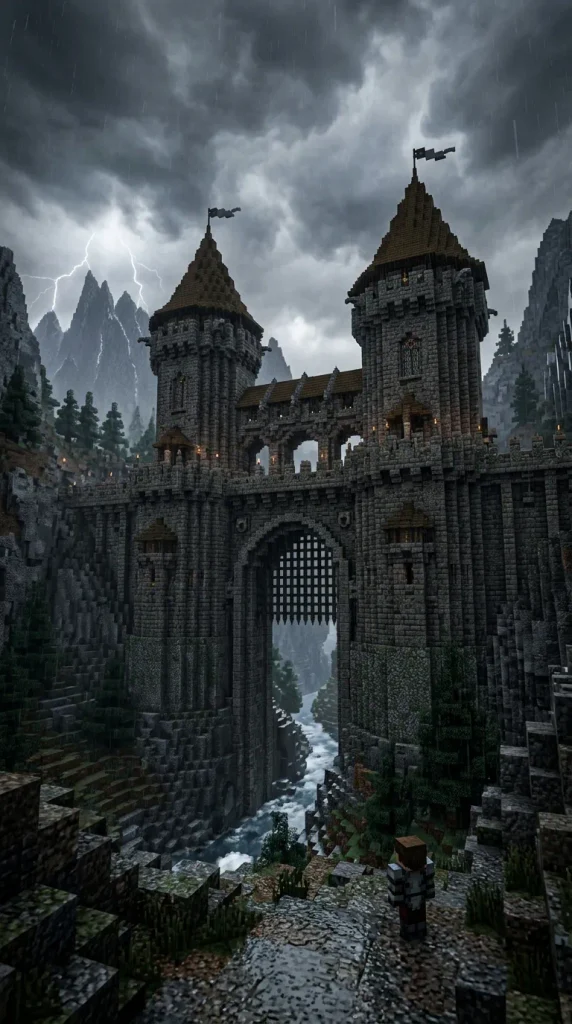
9. The Twin-Bastion Gatehouse Fortress
A layout where the primary structure serves as an immense, heavily fortified mountain-pass gate between two towering bastions.
- What It Means: A high-security layout built to choke off a canyon, valley, or river pass, where two identical heavy towers flank a grand central portcullis.
- How to Build It: Construct two thick, round or octagonal bastions spaced 15–20 blocks apart. Bridge them with an multi-story archway containing a functional redstone iron-bar portcullis, murder holes, and a central command hall.
- Palette & Blocks: Reinforced Deepslate, Polished Granite, Stone Bricks, Iron Bars, and Dark Oak Planks.
- Pro Tips: Include machicolations (overhanging floor openings) along the upper parapets using trapdoors to add depth and functional defense.
- Variations: Extend rear support halls straight into the flanking mountains to house hidden storage and living quarters.
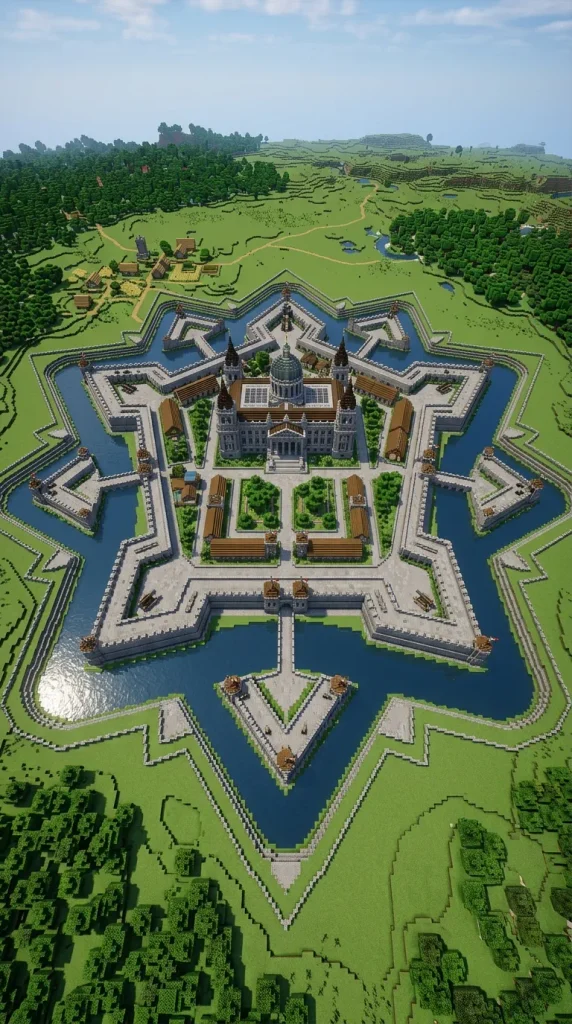
10. The Star Fortress (Vauban Style)
A geometric, Renaissance-era military layout featuring triangular bastions arranged in a star pattern to eliminate blind spots.
- What It Means: A low-profile, highly geometric layout that spreads horizontally across flat terrain with angular outer walls and flat artillery roofs.
- How to Build It: Plot a central pentagon or hexagon. Extend pointed, diamond-shaped bastions from each vertex. Surround the entire structure with a wide, dry ditch or water-filled ditch lined with smooth stone.
- Palette & Blocks: Mud Bricks, Polished Andesite, Cobblestone, Coarse Dirt, and Stripped Dark Oak.
- Pro Tips: Keep the walls relatively low (10–14 blocks high) but make them thick (5–7 blocks deep) with grass-covered ramparts on top.
- Variations: Place a decorative Baroque-style palace right in the central core to contrast the utilitarian outer walls.
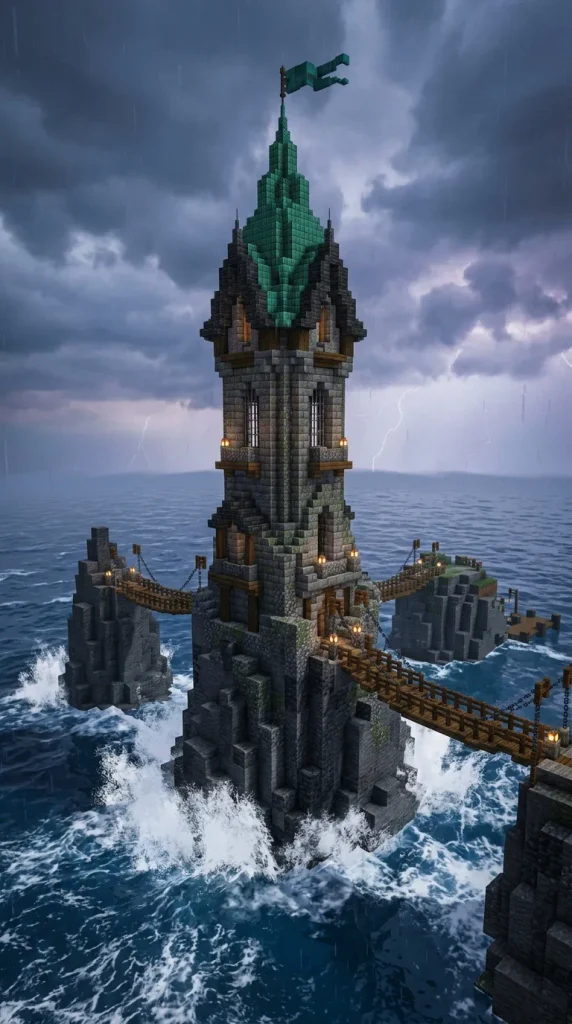
11. The Coastal Sea-Stack Watchtower
A slender, vertically oriented fortress built across several isolated sea stacks jutting out of the ocean.
- What It Means: A naturally isolated layout that relies on vertical space and defensive ocean isolation, linked by elevated rope bridges.
- How to Build It: Locate or build narrow ocean rock pillars. Erect slender, weather-worn watchtowers on each stack, using arches and diagonal timber struts to widen the living platforms at the tops of the pillars.
- Palette & Blocks: Mossy Cobblestone, Prismarine Bricks, Weathered Copper, Stripped Spruce, and Barrel accents.
- Pro Tips: Use weathered and oxidized copper blocks for the conical roofs to simulate sea-spray oxidation over centuries.
- Variations: Carve a hidden subterranean submarine or boat dock directly into the sea stack base below the waterline.
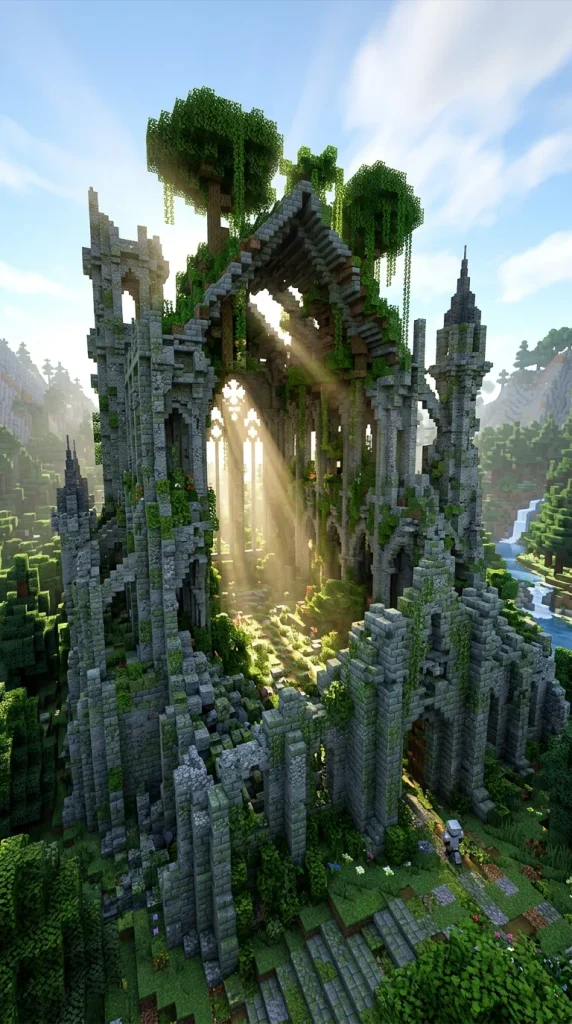
12. The Overgrown Ancient Ruin Citadel
A crumbling, nature-reclaimed castle layout where broken walls reveal overgrown inner courtyards, hollow towers, and collapsed roofs.
- What It Means: A narrative-driven layout prioritizing decay and nature over immaculate geometry, blending ruins with lush botanical biomes.
- How to Build It: Construct a complete castle layout on paper, then systematically “break” parts of the structure: punch holes in walls, collapse one side of a tower, and fill the breach with fallen rubble, moss, and giant trees.
- Palette & Blocks: Moss Block, Mossy Stone Bricks, Cracked Stone Bricks, Pale Oak Wood, and Spore Blossoms.
- Pro Tips: Use green wool, moss carpets, and leaf blocks cascading over broken parapets to simulate thick carpets of moss and ivy.
- Variations: Incorporate ancient redstone mechanisms, broken automatons, or sculk infestations spreading from the cellars.
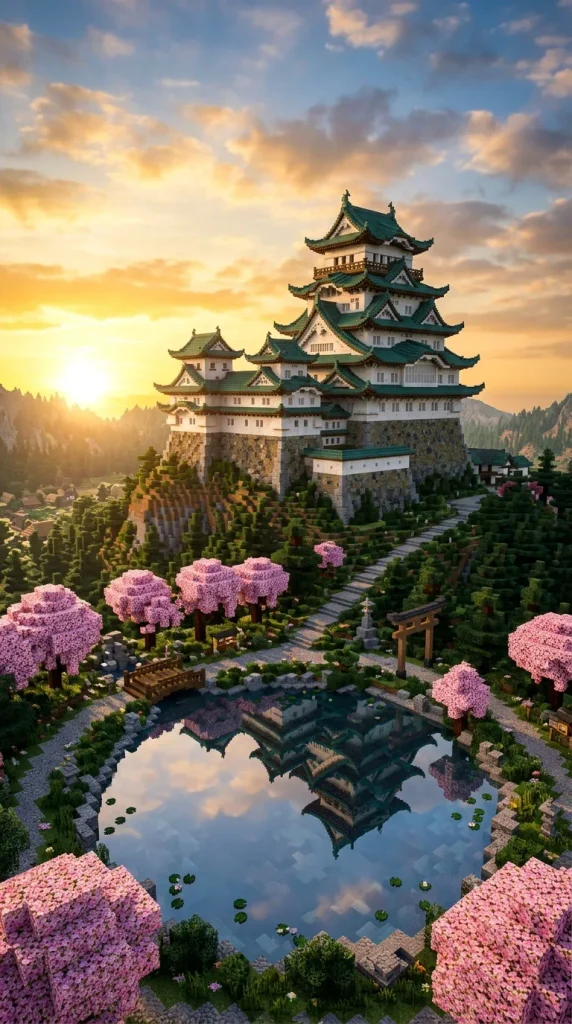
13. The Japanese Shiro Hilltop Palace
A multi-tiered East Asian castle layout featuring curved stone foundations (tenshu), contrasting white walls, and sweeping flared roofs.
- What It Means: A defensive Japanese-inspired layout characterized by sloping stone bases (musha-gaeshi) topped with tiered, symmetrical wooden pavilions.
- How to Build It: Build an angled stone foundation that flattens out near the top. Erect 3–5 progressively smaller square stories with dark exposed framing, white wall fill, and sweeping gabled rooflines using stairs and slabs.
- Palette & Blocks: Smooth Basalt, Calcite or White Concrete, Dark Prismarine or Nether Brick Stairs (for roofs), and Cherry Blossom Wood.
- Pro Tips: Use upside-down stairs at the corner eaves to create the iconic upturned, curved roof corners (sori).
- Variations: Surround the castle complex with stepped cherry blossom orchards and koi ponds filled with tropical fish.
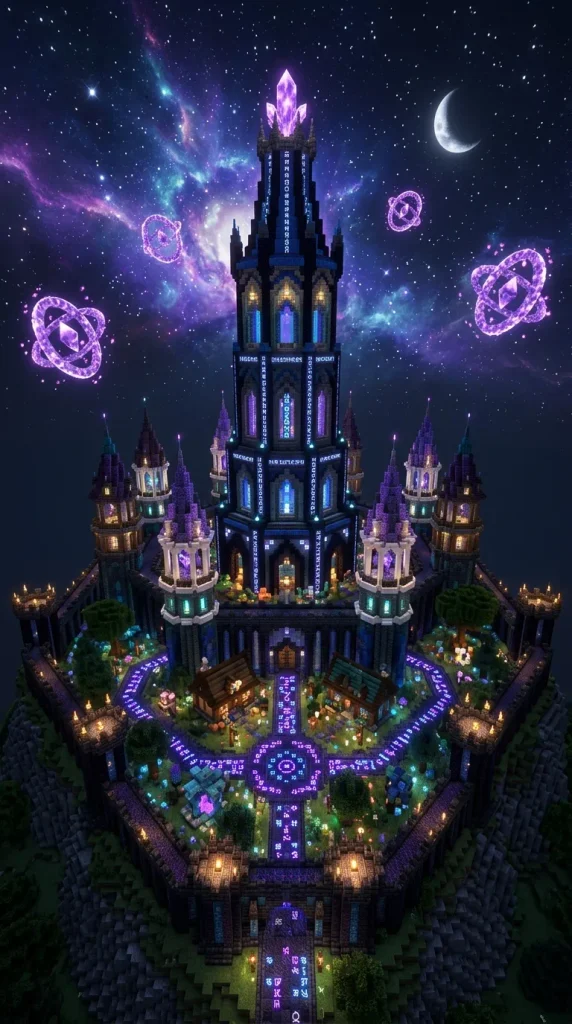
14. The Octagonal Wizard’s Sanctum
A geometric layout based on concentric octagons, with a central arcane tower surrounded by eight smaller specialized spires.
- What It Means: An arcane, mystical layout that favors geometric symmetry, magical libraries, alchemy bays, and astronomical observatories.
- How to Build It: Layout an octagonal boundary. Build eight equidistant satellite towers dedicated to specific disciplines (potions, enchanting, smithing), connected by flying skyways to a central tower twice their height.
- Palette & Blocks: Polished Blackstone, Lapis Lazuli Blocks, Amethyst Blocks, Copper, and Crying Obsidian.
- Pro Tips: Suspend glowing crystal clusters or rotating obsidian rings around the central spire using glass or barrier blocks.
- Variations: Integrate glowing enchanting runes on the courtyard floor using tinted glass over layered sea lanterns and colored wool.
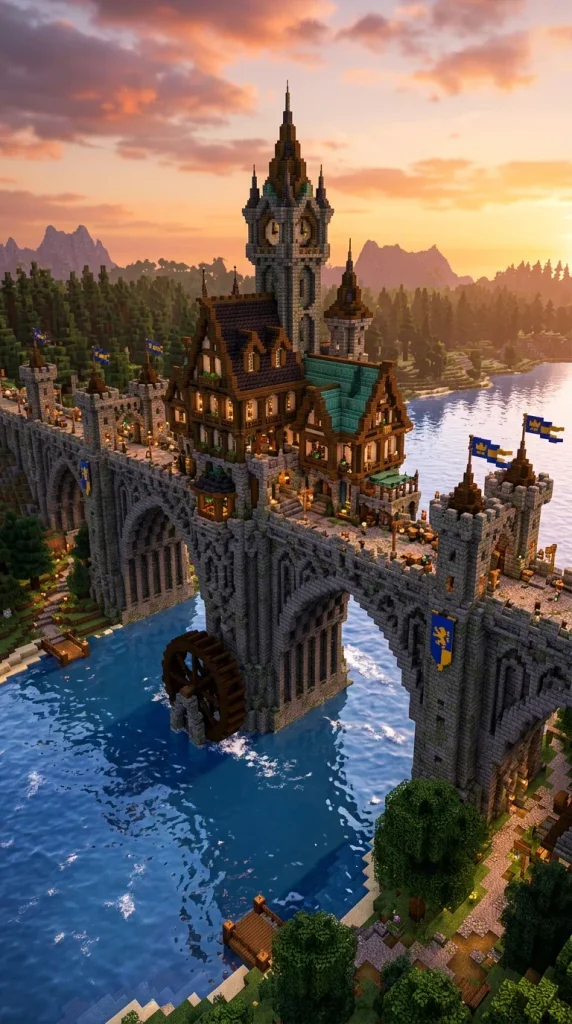
15. The Linear River-Spanning Viaduct Castle
A defensive bridge fortress layout that spans completely across a wide river, canyon, or fjord.
- What It Means: An infrastructure layout that acts simultaneously as a functioning bridge and a multi-level toll castle, controlling land and water transit.
- How to Build It: Lay down massive stone bridge piers in a river or chasm. Build vaulted arches connecting them. Construct a multi-story fortress over the central arches, featuring portcullises that lower directly into the water.
- Palette & Blocks: Stone Bricks, Andesite, Spruce Planks, Cobblestone Walls, and Lanterns.
- Pro Tips: Build water wheels and lower docks into the support piers to give the fortress industrial functionality.
- Variations: Place the build over a ravine in the Nether, with the bridge spanning across a wide sea of open lava.
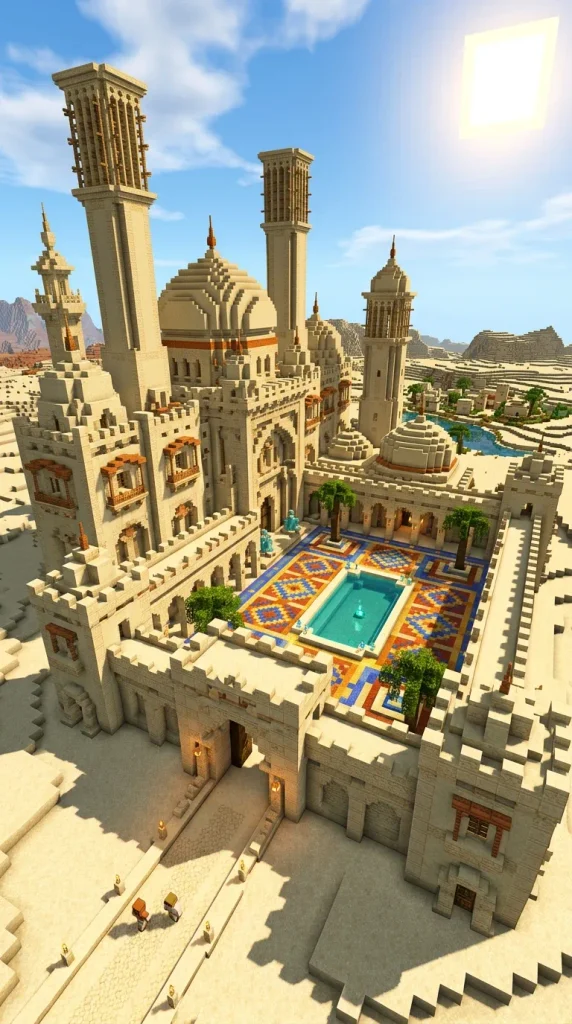
16. The Desert Oasis Sandstone Citadel
A sprawling palace fortress featuring flat roofs, sun-dried domes, open courtyards, wind-catcher towers, and hidden indoor water pools.
- What It Means: A Middle Eastern and North African-inspired layout designed to keep interiors cool, featuring thick walls, small windows, and lush internal courtyards.
- How to Build It: Lay out rectangular single and double-story modules clustered together tightly. Crown major intersection rooms with smooth sandstone domes. Create an interior courtyard centered around a rectangular reflection pool.
- Palette & Blocks: Smooth Sandstone, Red Sandstone, Terracotta, Glazed Terracotta accents, and Jungle Wood.
- Pro Tips: Use patterned glazed terracotta as mosaic tile flooring around water features to simulate luxury craftsmanship.
- Variations: Add stepped garden terraces lined with palm trees (jungle wood + jungle leaves) cascading down the outer perimeter.
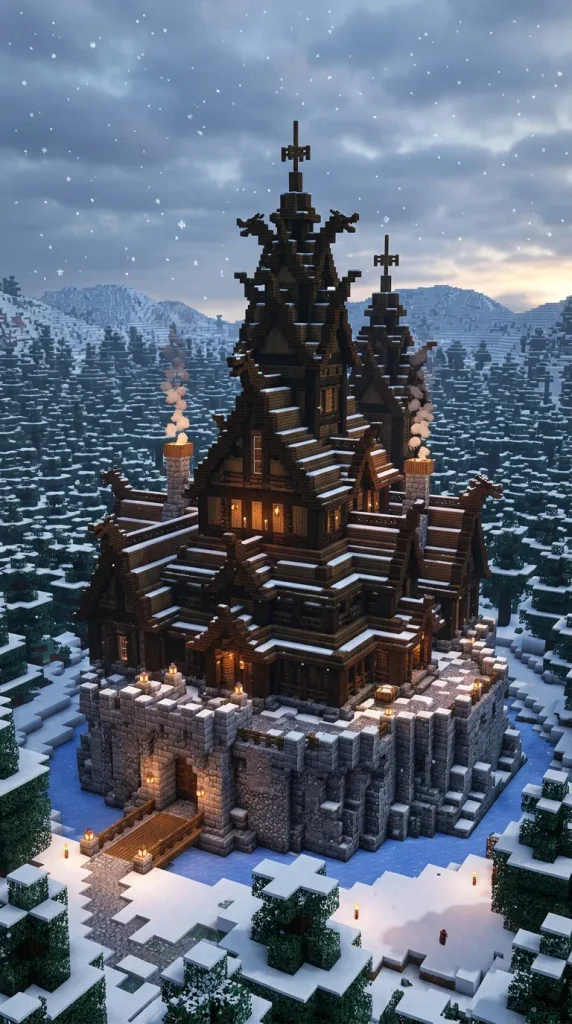
17. The Nordic Wooden Stave Stronghold
A cold-climate fortification layout that combines heavy timber construction, steep pitched roofs, and dragon-head roof gables.
- What It Means: An early-medieval Scandinavian layout featuring multi-tiered, steep wooden roofs designed to shed snow, built on top of a low stone wall base.
- How to Build It: Lay a foundation of rough cobblestone. Build the primary frame using vertical stripped spruce and dark oak logs. Layer multiple steep roofs at varying angles, finishing the gable ends with decorative wooden carvings.
- Palette & Blocks: Stripped Dark Oak, Spruce Planks, Cobblestone, Dripstone Blocks, and Campfires (for chimney smoke).
- Pro Tips: Use upside-down spruce stairs and trapdoors to shape curved cross-beams and ornate timber gables.
- Variations: Situate the build inside a snowy taiga biome on the edge of an icy fjord with a longship docked alongside.
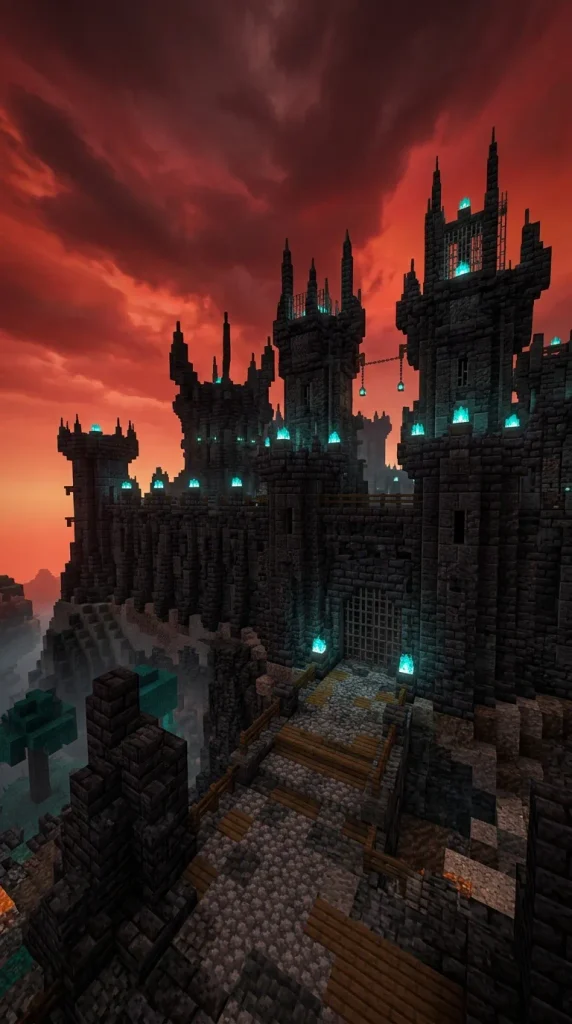
18. The Gothic Dark Fantasy Bastion
A brutalist, dark fantasy fortress layout defined by aggressive spikes, angular silhouettes, sheer basalt walls, and soul-fire accents.
- What It Means: An imposing fortress aesthetic focused on sharp angles, high walls, deep overhangs, and stark contrast.
- How to Build It: Avoid straight $90^\circ$ angles; use diagonal walls ($2\times1$ or $3\times1$ steps) that slope upward into jagged points. Use minimal exterior windows, relying instead on narrow arrow slits and vertical battlements.
- Palette & Blocks: Polished Blackstone Bricks, Deepslate, Nether Quartz, Soul Sand (for soul fire), and Warped Wood.
- Pro Tips: Add blue soul-fire braziers atop every battlement spike to give the build an eerie, spectral glow.
- Variations: Replace soul fire with hidden redstone lights and lava curtains behind iron grates for an infernal Nether-lord theme.
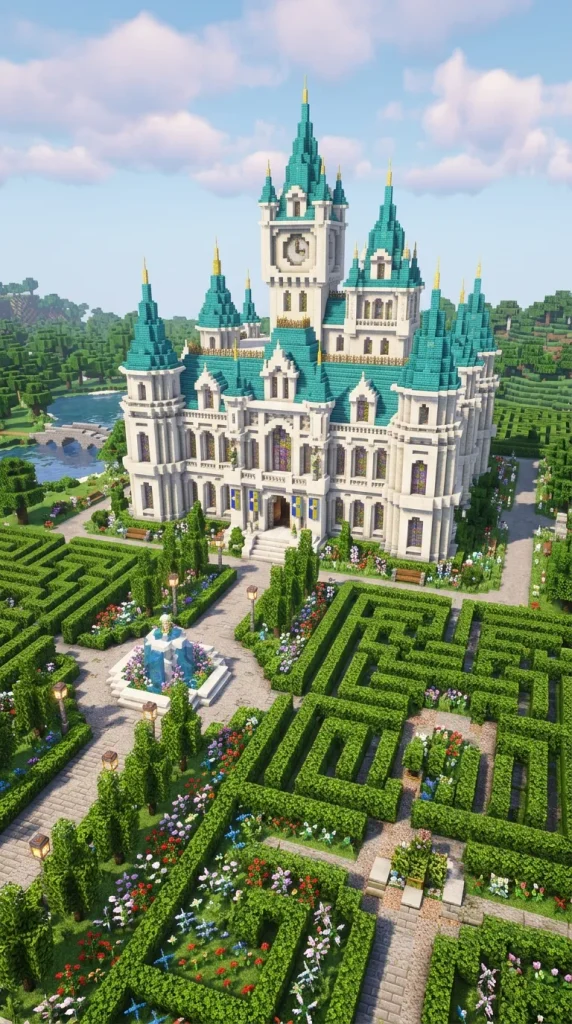
19. The Fairy-Tale Romantic Chateaux
An ornate French Renaissance-inspired castle layout featuring asymmetrical round towers, conical blue roofs, dormer windows, and manicured gardens.
- What It Means: A romanticized castle layout focused on elegance, light palettes, towering conical roofs, and decorative manicured hedges.
- How to Build It: Lay down smooth, cylindrical corner turrets connected by clean, multi-story manor halls. Top the turrets with tall, conical roofs. Surround the estate with a parterre garden using hedge mazes and gravel paths.
- Palette & Blocks: Diorite, Calcite, Quartz, Prismarine/Dark Prismarine (for roofs), and Flowering Azalea.
- Pro Tips: Build delicate dormer windows jutting out of the steep roofs using quartz stairs, trapdoors, and glass panes.
- Variations: Integrate an attached glass greenhouse conservatory packed with exotic plants and botanical workstations.
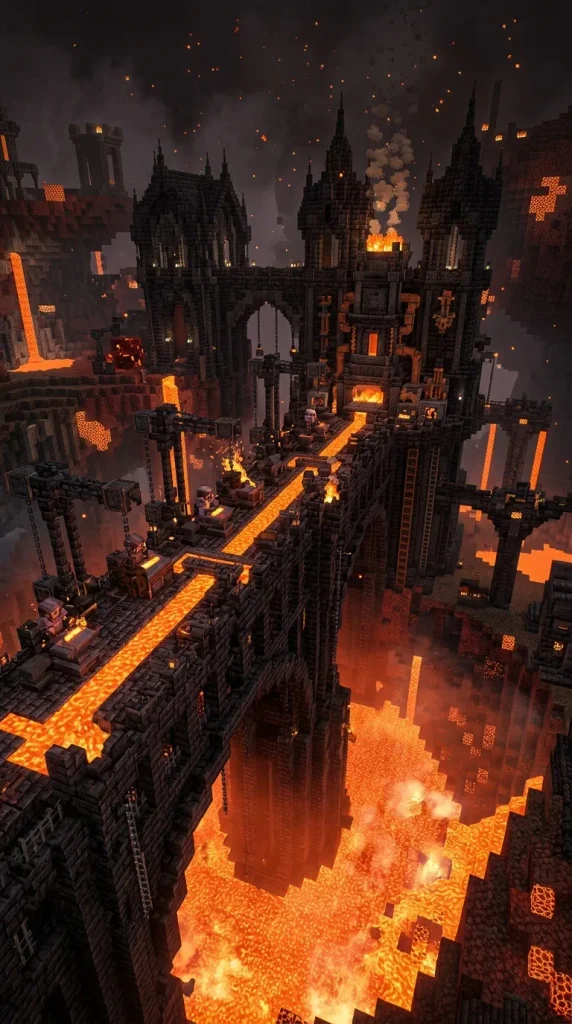
20. The Netherite Volcanic Forge Castle
An industrial fortress layout built directly over or around a volcanic crater, featuring heavy aqueducts that channel molten lava.
- What It Means: A heavy industrial and military layout that integrates volcanic terrain into its defenses, featuring smelteries, forges, and magma-powered machinery.
- How to Build It: Ring an active lava lake or crater with heavy stone piers. Suspend the primary workshop and keep directly over the crater core. Build wide aqueducts that route flowing lava into industrial forge basins.
- Palette & Blocks: Nether Bricks, Basalt, Polished Deepslate, Gilded Blackstone, and Magma Blocks.
- Pro Tips: Use orange stained glass layered over magma blocks and lava to create the illusion of intense radiant heat and deep molten chambers.
- Variations: Extend the fortress downwards into a massive open-pit quarry mine lined with industrial cranes and minecart railways.